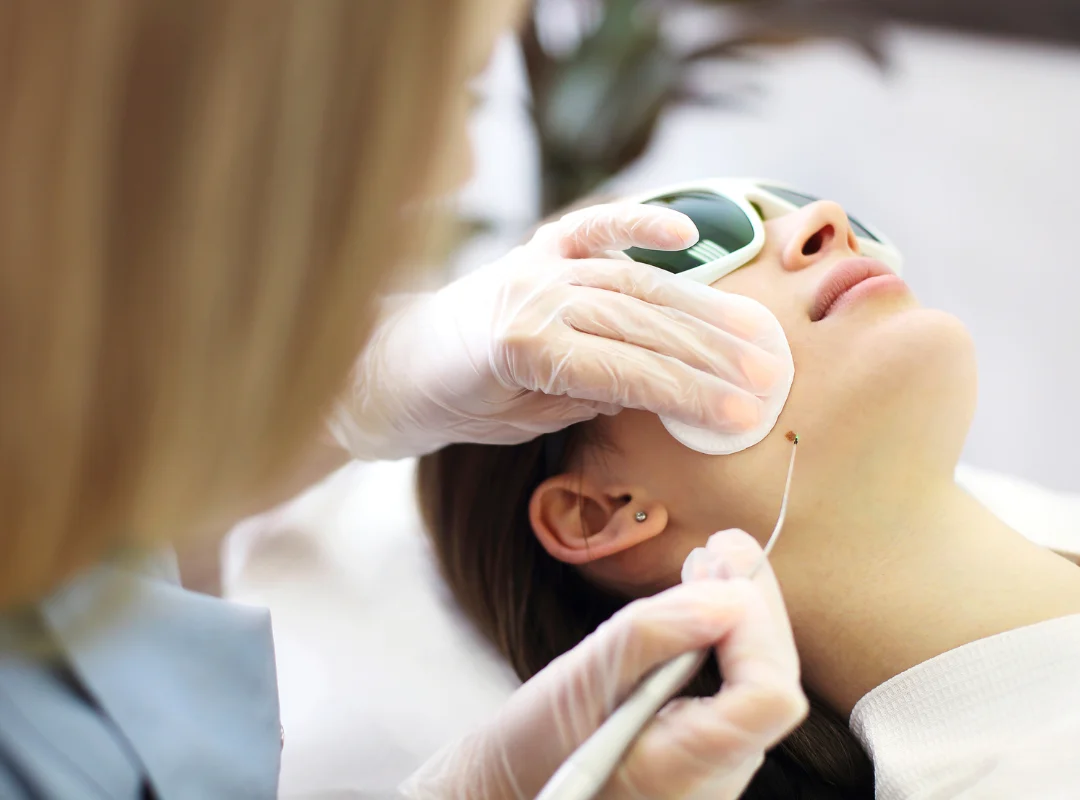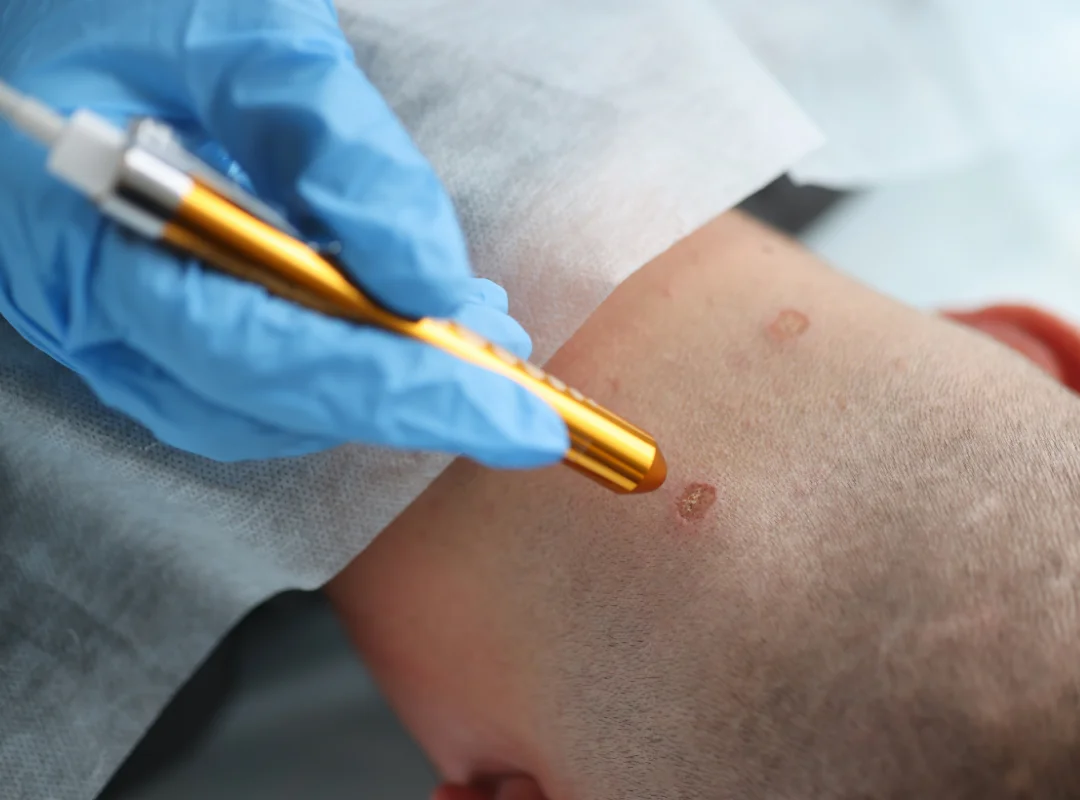

Laser mole removal uses focused light energy to break down pigment in moles. It works best on flat, superficial lesions. Deeper or suspicious moles often require surgical removal. Most moles are harmless, but that doesn’t mean you have to live with ones that cause discomfort or affect your confidence.
The good news: mole removal has come a long way, and today you have several well-studied options to choose from. Laser mole removal is one of the most searched procedures in cosmetic dermatology, yet it’s also one of the most misunderstood.
Many people assume laser treatment can remove any mole quickly and without a trace. The reality is more nuanced. The right method depends on your mole’s type, depth, size, and location – and a qualified dermatologist should always guide the decision.
What Are Benign Moles? (Melanocytic Nevi Explained)
Moles, also known as melanocytic nevi, are benign clusters of melanocytes, the skin cells that produce pigment.
According to a 2021 clinical review published in CosmoDerma (Pangti & Gupta), most moles are acquired from childhood to midlife and are present across all skin types. However, they’re more common in lighter-skinned individuals.
When treating skin blemishes, patients are often concerned about structural markings. Checking what to expect regarding laser hair removal can give you a clear perspective on how modern dermatological lasers interact with healing skin.
Moles are classified by depth:
- Junctional nevi sit at the skin’s surface and appear as flat, pigmented brown spots.
- Compound nevi extend into the dermis and appear slightly raised with a brown color.
- Intradermal nevi are located deeper in the skin and appear dome-shaped or skin-colored, sometimes with hair.
As mole cells (nevomelanocytes) migrate deeper into the dermis, they gradually lose their ability to produce pigment. This depth is what determines which removal method is most appropriate. Flat, junctional moles respond well to lasers. Deeper moles typically require excision.

How Laser Mole Removal Works
Laser mole removal uses concentrated light energy to target and destroy the pigment inside mole cells. Two main types of lasers are used:
If your mole is suspicious, surgical removal is always the safer choice – because tissue can be sent to a pathologist to rule out malignancy. A laser mole treatment, while less invasive, cannot confirm whether the tissue is fully benign.
Can Lasers Remove Multiple Moles at Once?
Yes. And this is actually one of the key advantages of laser treatment. Laser removal is particularly effective for removing multiple moles in a single session. Lasers allow precise targeting across different body parts without the need for individual surgical sites, resulting in reduced overall recovery time and less disruption to the surrounding skin.
However, even when treating multiple moles, each must first be examined and found benign. A board-certified dermatologist cannot ethically laser a lesion without first confirming it poses no cancer risk. The more moles involved, the more important it is to perform a thorough mole examination before any treatment begins.

Recovery Time & Proper Aftercare
Recovery time varies by the method used. Here’s what to expect:
Ablative laser removal:
- Days 1 – 2: Mild redness, swelling, and possible pinpoint bleeding; a thin crust forms
- Days 3-14: The crust naturally separates. Do not pick at it, as this significantly increases the risk of scarring.
- Weeks onward: A pink mark remains and gradually fades over several months
Non-ablative laser removal:
- Days 1 – 7: The mole may appear darker or slightly smudged; no wound care required
- Weeks 1 – 4: Pigment gradually fades; little visible change after the first session is normal
Surgical excision: Stitches are typically removed after one to two weeks. You should avoid heavy physical activity during this period.
For proper aftercare across all methods:
- Keep the area clean with a gentle, soap-free cleanser (e.g., Cetaphil or CeraVe).
- Avoid direct sunlight for at least 2 weeks.
- Apply SPF 50+ sunscreen once the skin surface has healed.
- Avoid retinoids, AHAs, and alcohol-based products near the wound during healing.
If persistent surface spots remain after the wound has completely healed, you might explore alternative clinical options and determine whether chemical peels can remove dark spots to help restore a completely uniform skin tone.
Choose the Right Method, Not Just the Easiest One
Laser mole removal is a safe, effective option for the right candidate. But it’s not a universal solution. Flat, benign, pigmented moles in cosmetically sensitive areas respond well to laser treatment. Deeper moles, suspicious moles, or those requiring tissue confirmation need surgical excision.
The most important step is getting an expert assessment before committing to any removal method. Book a consultation with Dr. Faiqa Chaudhry, MD, at Skin Artistry Clinic to determine which approach is right for your specific moles and skin type. Contact us now!