

Facial hair is one of the most common cosmetic concerns for both men and women. From the upper lip to the chin and sideburns, unwanted hair can impact your confidence and daily routine. Traditional hair removal methods like waxing, threading, and shaving are quick fixes, but they often lead to irritation, ingrown hairs, or uneven regrowth. That’s why more people are turning to laser hair removal for smoother, longer-lasting results. But many still wonder: Is laser safe for facial hair removal? The answer is yes, it’s safe for most skin types when performed by a qualified professional using FDA-approved equipment. Let’s explore the details.
How Laser Hair Removal Works on the Face
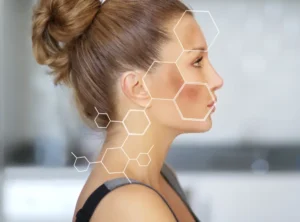
Laser hair removal is a medical procedure that targets hair follicles beneath the skin surface. It uses laser light: a concentrated beam of light energy , to heat and destroy hair follicles, stopping or slowing future hair growth. The process relies on the principle of selective absorption: the melanin in the hair (pigment) absorbs the light while the surrounding skin remains unharmed. This makes laser therapy particularly useful for those with dark hair and light or light skin because the laser can clearly distinguish between the two. For individuals with dark skin, advancements in laser technology like the alexandrite laser and Nd:YAG laser have made the procedure much safer and more precise. These devices are designed to bypass excess pigment in darker tones, making laser hair removal safe for a wider range of skin colors and hair types. At Skin Artistry Clinic, our board-certified practitioner, Dr. Faiqa Chaudhry, customizes laser settings to each patient’s skin tone and hair type for safe and lasting results.What Happens During a Laser Hair Removal Procedure
A typical laser hair removal treatment on the face is straightforward and quick. Here’s what you can expect:- Preparation: Before the laser treatment, the skin is cleaned, and any makeup or lotion is removed. The area might be shaved so the laser beam can reach the hair shaft more effectively.
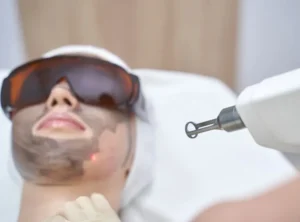
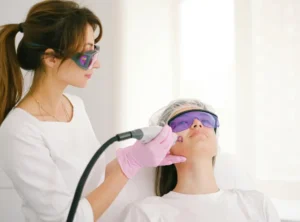
- Protection: Both you and your technician wear eye protection to prevent exposure to the intense laser pulses.
- Application: The technician uses a handheld device that emits brief bursts of laser energy. You might feel a quick sensation, often compared to a rubber band snapping against the skin, a sign that the laser removes hair effectively.
- Cooling: A cooling tip or cold gel is applied to minimize temporary discomfort and protect the treated skin
How Many Laser Treatments Do You Need?
Laser hair removal is not a one-time fix. Because hair growth occurs in cycles, only hairs in the active growth phase (anagen phase) respond to treatment. That’s why multiple treatments are necessary for the best results. Most patients need between 4 and 8 sessions spaced several weeks apart to achieve long-term hair reduction. The exact number depends on your hair color, skin tone, hair type, and the specific laser hair removal procedure used. After the main series, occasional maintenance treatments may be recommended once or twice a year to prevent future hair growth.Is Laser Safe for Facial Hair Removal on All Skin Types?
Safety largely depends on matching the right laser treatment to your skin and hair type. Historically, hair and light skin combinations responded best, but modern advancements allow even those with dark skin or tanned skin to benefit safely. Here’s how different combinations affect the process:- Dark hair and light skin: Ideal for laser because of the high contrast between pigment and skin.
- Dark skin: Requires specialized hair removal lasers like Nd:YAG to minimize risks of pigmentation.
- Light colored hair or light blonde: More challenging since less pigment means less laser absorption.
- Tanned skin: Should be avoided during treatment since sun exposure or tanning beds can increase sensitivity and risk of skin irritation.
Is Laser Hair Removal Safe for the Face?
When performed by trained professionals, laser hair removal is safe for the face. It’s a controlled medical procedure designed to target specific follicles while protecting the surrounding skin. Most patients experience only mild effects such as:- Slight redness or swelling (similar to a mild sunburn)
- Tingling or warmth immediately after treatment
- Minimal temporary discomfort