
How Effective is PRP for Hair Growth?
If you’ve been experiencing hair loss, you may have come across PRP therapy as a potential solution. This treatment has gained popularity among people looking to restore thickness and improve hair health. But the key question remains: how effective is PRP for hair growth? Let’s take a closer look to help you decide if it’s the right option for you.


What is PRP?
PRP, or platelet-rich plasma, is a concentrated component of your own blood prepared through a simple blood draw. The sample is placed in a centrifuge to separate the red blood cells from the plasma, leaving behind a golden fluid rich in growth factors that support cell repair and healing.
PRP therapy has been widely used in medicine for years to treat sports injuries, promote joint healing, and aid wound recovery. More recently, research has shown its potential in regenerative medicine for conditions like hair loss and other skin appendage disorders.
How Does PRP Work for Hair?
Hair grows in cycles that include active growth, resting, and shedding phases. In conditions like pattern baldness, androgenetic alopecia, or alopecia areata, this cycle becomes disrupted. Hair follicles shrink, dormant follicles stop producing visible hair, and thinning or bald patches gradually develop.
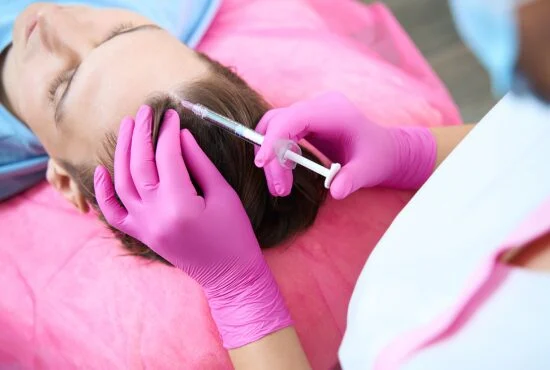
PRP therapy works by injecting growth factor-rich plasma into the scalp. These growth factors help stimulate hair follicles, improve blood circulation, and activate dermal papilla cells, the cells responsible for driving hair growth. As a result, PRP may encourage regrowth, increase hair density, and even produce thicker strands in some individuals.

PRP Therapy vs. Other Hair Loss Treatments
Before PRP, the main treatments for hair loss included:
- Topical minoxidil (a foam or liquid applied to the scalp)
- Oral finasteride (a pill often used for male pattern baldness)
- Hair transplantation (a surgical option that moves healthy hair follicles to bald areas)
PRP is different because it uses your own blood and doesn’t involve daily medication or surgery. For many, it’s seen as a more natural way of promoting hair growth.
That said, PRP isn’t usually a permanent solution on its own. Many doctors recommend a combination approach, including topical minoxidil, oral finasteride, or even hair transplantation, for long-term hair restoration.
What the Research Says About PRP Effectiveness
Research on PRP for hair restoration is still evolving, but the results so far are encouraging:
- A study published in the International Journal of Women’s Dermatology found that patients with androgenic alopecia experienced visible hair regrowth after a series of PRP sessions.
- Another trial in Drug Design, Development and Therapy reported significant improvements in both hair thickness and density in participants receiving PRP injections compared to placebo.
- Clinical reviews also suggest that many patients notice less hair shedding and improved density after completing at least three treatments.
That said, results can vary. Some individuals achieve noticeable thickening and regrowth, while others see only subtle changes. Outcomes often depend on factors such as overall health, the stage of hair loss, and the platelet concentration used in the PRP preparation.
How Many PRP Sessions Do You Need?
One of the most common questions is: how many PRP sessions are needed for hair growth?
Most doctors recommend starting with three treatments spaced about 4–6 weeks apart. After that, maintenance sessions every 4–6 months may be suggested to maintain results.
While some people see visible hair regrowth within a few months, others may need more time to notice an improvement in hair thickness.
Who Benefits the Most From PRP?
PRP works best for people who are in the early stages of hair loss. If you’re dealing with thinning hair rather than complete baldness, you’re more likely to see results. This is because there are still dormant hair follicles that can be “reawakened.” It has shown positive effects for:
- Androgenetic alopecia (both men and women with pattern baldness)
- Alopecia areata (an autoimmune condition causing patchy bald spots)
- People with early signs of hair thinning
- Those looking to improve blood flow and encourage healthier hair
However, for people with advanced male pattern baldness, hair transplantation may be a better option, sometimes combined with PRP to support hair health after surgery.
Benefits of PRP for Hair Growth
Here are the common benefits of PRP hair treatment:
- Stimulates hair growth naturally using your own blood
- Improves hair thickness and quality of thicker hair strands
- Supports cell growth and cell repair in the scalp
- Encourages tissue regeneration and improves hair health
- Provides a non-surgical treatment option compared to hair transplantation
- Reduces shedding and promotes hair growth cycle regulation
What to Expect During PRP Treatment
The process for hair PRP treatment is straightforward:
- A blood draw is performed (just like a routine test).
- The sample is spun to separate platelet concentration from red blood cells.
- The PRP is injected directly into the scalp, especially around areas of thinning hair or reduced hair.
The entire PRP treatment takes less than an hour, and you can usually go back to daily activities afterward. Some mild soreness may occur, but it typically resolves within a day or two.

Side Effects and Considerations
Because PRP uses your own blood, the risks are generally lower than with many other hair treatments. Mild swelling, redness, or scalp tenderness may occur. In rare cases, infection or follicle injury can happen if the procedure isn’t performed by a board-certified, trained professional.
It’s also important to remember that PRP is not a quick fix. Ongoing maintenance sessions are often required, and results vary depending on your overall health and how well your hair cycle responds to treatment.
Is PRP an Effective Treatment for Hair Loss?
So, how effective is PRP for hair growth? The short answer: it can be an effective treatment for the right candidates, especially those with early-stage hair loss or androgenic alopecia. Many studies and patient experiences show significant improvement in hair density, hair thickness, and even visible hair regrowth after PRP sessions.
But it’s not magic. PRP works best as part of a holistic approach with other hair loss treatments like topical minoxidil or oral finasteride, especially if your goal is long-term hair restoration.
Final Thoughts: PRP for Hair Growth
PRP combines regenerative medicine with modern hair loss treatments. Using growth factors from your own blood helps stimulate hair follicles and support healthier hair.
If you’re starting to notice thinning hair or have androgenetic alopecia, it may be worth consulting a doctor to see if PRP therapy could help. While it isn’t a permanent cure, many patients experience improvements in hair thickness, density, and overall scalp health, making PRP one of the more promising options for hair restoration.
Get PRP Hair Rejuvenation at Skin Artistry Clinic
Want to regrow your hair with PRP? Skin Artistry Clinic can help you! Serving Alamo, San Francisco, the East Bay Area, and Danville in California, our board-certified dermatologists offer professional PRP hair rejuvenation.
We also offer skin rejuvenation treatments, including IPL photofacials, hydrafacials, PRP vampire facials, and more. Moreover, our dermatologists have years of expertise in anti-aging procedures like Botox, fillers, SkinVive, and IV therapy.
If you want to regrow your hair or improve its health, contact us today! Call us at 925-404-4293 to book your consultation now!