



You can get freckles for different reasons. For some, freckles are a lifelong companion. Others get them after a beach trip. But have you ever stopped to ask: why do we get freckles in the first place?
It’s a common question, and the answer lies in a mix of your DNA and your relationship with the sun. While they are usually harmless, understanding why they appear can tell you a lot about your skin’s health. Read on!
Why Do We Get Freckles?
You need to understand melanin first. Melanin is the pigment that gives your skin, hair, and eyes their color. It’s produced by skin cells called melanocytes. Think of melanin as your body’s natural sunscreen. This uneven pigment distribution is similar to other conditions treated with procedures that explain how chemical peels remove dark spots in cosmetic dermatology.
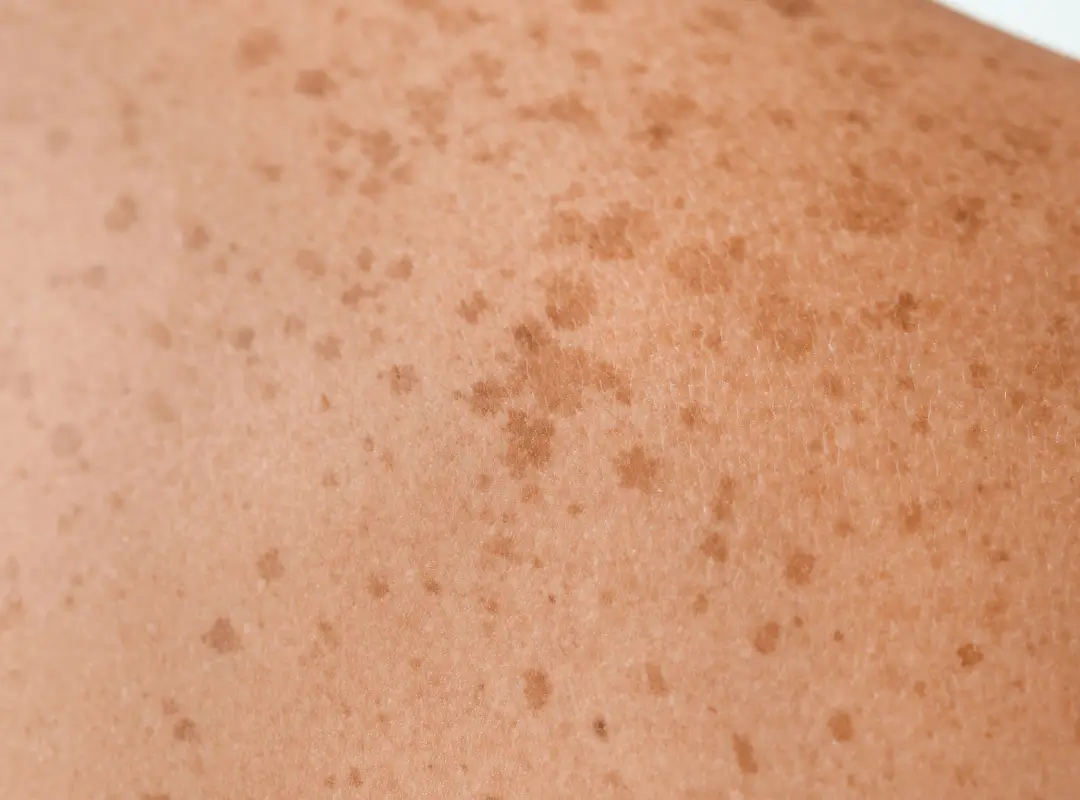
In people with darker skin, this melanin is usually produced evenly. Hence, they get a tan. However, in people with fair skin or light skin, melanin clumps together in small areas. These concentrated clusters of pigment are what we call freckles.
So, why do some people get freckles while others tan? It mostly comes down to genetics. If you have blond or red hair and pale skin, your melanocytes produce a specific type of melanin called pheomelanin, which doesn’t protect as well against UV radiation.
This makes you more likely to develop freckles instead of a tan. Because sun exposure changes pigment behavior, some patients also research how to lighten skin naturally when trying to manage uneven tone.

Are Freckles Genetic?
The answer is: Yes. If your parents have them, there’s a good chance you will too. The main gene responsible is the MC1R gene. This gene instructs your body on how much of which type of melanin to produce.
You can have the genetic potential for freckles, but without sun exposure, they won’t appear. That’s why newborn babies never have them: they haven’t been exposed to enough UV rays yet. It’s the combination of your genes and the sun that causes freckles to form.
Types of Freckles
This falls into two categories: ephelides and solar lentigines. Here’s the difference:
1. Ephelides (The “True Freckles”)
Ephelides are small, flat spots that are usually red or light brown. They typically appear on sun-exposed areas like the face, arms, upper back, and chest.
- Who gets them: Common in children and people with light skin and red hair.
- Behavior: These freckles fade in the winter when there is less sun exposure and become darker and more visible in the summer.
- Appearance: They have clear borders and are usually uniform in color.
2. Solar Lentigines (Sun Spots or Age Spots)
They are actually signs of accumulated sun damage. Solar lentigines are generally larger than common freckles and appear as darker brown spots or dark patches.
- Who gets them: Usually adults over 40, though younger adults with repeated sun exposure can get them too.
- Behavior: Unlike ephelides, these do not fade in the winter. They are permanent unless treated. In many cases, dermatology clinics address these concerns using treatments discussed by skin experts for pigmentation treatment in Orindo, CA.
- Appearance: They can have irregular borders and look like dark brown or black splotches. They are also known as liver spots or sun spots.

Causes of Freckles
The primary trigger is UV exposure. When UV rays hit your skin, they stimulate the melanocytes to produce more melanin. If you have the genetic predisposition, this extra pigment deposits in specific spots, making existing freckles darker and causing new freckles to appear.
Long-term UV exposure is also why some people later explore whether IPL helps wrinkles on the face, blocking them and other light-based treatments targeting sun damage.
It’s important to note that while ephelides are largely genetic and harmless, solar lentigines are a direct result of photodamage. This means your skin cells have absorbed enough UV radiation to cause permanent changes in pigment production.
How to Prevent Freckles & Sun Damage?
If you want to prevent freckles from getting darker or stop new ones from forming, sun protection is your best defense. Since UV rays are the catalyst, blocking them stops the process. Preventing photodamage early can reduce the need for procedures, such as IPL, which people research, such as does IPL tighten sagging skin later in life.
Here is how you can protect your skin:
- Use Water-Resistant Sunscreen: Apply a broad-spectrum sunscreen with an SPF of 30 or higher. If you are swimming or sweating, ensure it is a water-resistant sunscreen.
- Cover Up: Wear protective clothing like long sleeves and a wide-brimmed hat to shade your face and neck.
- Avoid Peak Sun: The sun is strongest between 10 a.m. and 4 p.m. Try to stay in the shade during these hours.
- Don’t forget the “Hidden” Spots: We often forget areas like the upper back, ears, and back of the hands.
Remember, even on cloudy days, UV radiation penetrates the atmosphere and hits your exposed skin. Daily protection is non-negotiable if you freckle easily.
Final Thoughts
Knowing why we get freckles helps us take better care of our bodies. They are a sign that your skin is reacting to the sun, so treat them as a reminder to slather on that SPF.
Ultimately, having freckles doesn’t mean your skin is unhealthy, but it does mean it needs extra protection. Proper protection helps avoid future cosmetic correction treatments. People often look into IPL skin rejuvenation photofacial in Alamo, CA. So grab your hat, apply that sunscreen, and enjoy the sun safely. Your skin cells will thank you for it!
Get your Lost Confidence Back with Skin Artistry Clinic
If you’ve ever wished to get your lost skin volume, Skin Artistry Clinic has you covered. Our Skin Treatment offers a modern, non-surgical way to get that youthful appearance back again. The result? naturally refreshed look, not an “overdone” one. Book your consultation today with Dr. Faiqa Chaudhry.